martes, 9 de noviembre de 2010

wood coaster mania


Wood Coaster Mania:
Inventors try to do anything possible with wood. some worked out better than others. For example the Racing coaster, leap-the-gap coasters (never saw a rider until the missing section was filled in), Virginia Reels (coasters with small round tubs that could rotate as well), Ticklers (or pinball, coasters, place the round car at the top of an inclined ' pinball' layout and let it fall, never the same ride twice) The more steady earners however were the out-and-backs, figure 8's and Twisters.
Coaster building flourished from the turn of the century through the Roaring 20's, with an estimated 2,000 coasters in the USA alone. Every park of some size had a coaster. While these were not as intense as todays rides, imagine having one in every major city. Sadly, this trend did not last too long, and the Great Depression, as well as World War II, made it seem like the roller coaster fad had ended, with coasters being demolished at an alarming rate. We came to the brink of roller-coasters being a novelty item, found in obscure parks, or only a memory or legend to most of us.

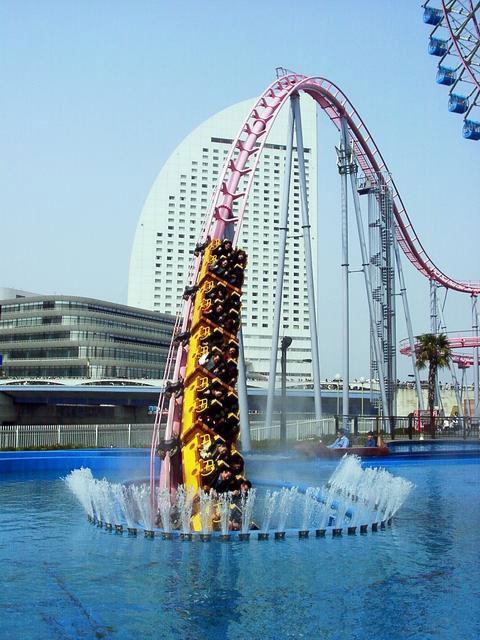
Busch Gardens Sheikra 2009


miércoles, 3 de noviembre de 2010

the haverhill downs


Haverhill was the american incarnations of the French slides. These were built inside buildings (often associated with roller-rinks) and consisted of getting into a toboggan sled with other riders, being pushed into an elevator that was hoisted to the top of the building, you then pushed yourself out of the elevator and onto a series of rollers. These rollers made a figure 8 path that sent you rolling quickly back and forth across the rink, until you landed on the ground floor, next to the elevators. Ride cost: 5 cents per ride 6/25 cents. These operated in late 19th century early 20th.

the maunch chunk railway


The Mauch Chunk Railway, is the American beginnings of the roller coaster. The Mauch Chunk Railway was devised not as a pleasure ride, but as a transportation system for the coal mine industry. The coal mines in the area had a basic problem. 'How to cheaply and effectively transport the coal from the mines on top of the mountain to the port in Mach Chunk, some 18 miles downhill. To solve this problem, a railway was devised that would run the 18-mile course in such a way that all the workers had to do was load the mine cars, push them off the top of the mountain, and they would follow the 18-mile course purely by gravity. This was possible since 17 of the 18 miles were downhill. Mules were employed to haul the empty cars back to the top. Shortly thereafter, a car for the mules was built so that they could 'ride' back down with the coal. Although it is not recorded, someone got the bright idea of loading the mine cars with people and pushing them down the hill. The 'ride' became an instant success. The track was used for coal mining during the day, and as a pleasure ride at night. To make life easier, the mules were replaced by a steam engine that would haul the empty cars up a longer but more gradual incline to the top of the mountain. This helped efficiency by having a motorized means to keep empty cars coming up, on a separate track, while coal was being transported down the main track. Soon both tracks became part of the Mauch Chunk Scenic Railway. People paid $1 to ride up on the incline (motorized track), then the engines were removed, and they were sent back down the main track, with just gravity to push them along. Think of this in terms of roller coaster stats:

Track length: 40 miles

Max. Speed: >100MPH

If anybody builds a coaster of that length, with that speed, tell me.

Anyway, in 1870 the coal miners found a shorter railway, using tunnels and steam engines. This left the Much Chuck Railway to be used exclusively for pleasure rides. A hotel and restaurant were even built on top of the mountain, and people would eat lunch before starting back down. (Not wise, IMHO). This 'ride' continued to operate until the 1930's with an exemplary safety record.

the beginning of the roller coasters

Rollercoasters can trace their origins back to the russian ice slides. Russian Ice slides, which first appeared in the 1700's were amusement devices found at fairs all over Russia. A slide consisted of a steep drop made entirely of ice, occasionally a few creative people added a small series of bumps at the end. The rider rode in a sled that was made either of wood or ice, with ice being common. Sand was placed at the end to slow the sleds down. The person sat on a straw patch and held on to a rope tied through a hole drilled in the ice block. These early rides were quite popular, and soon flourished. At this time sliding down the slides was a risky business and required skill on behalf of the rider, so skilled guides made their services available to novice riders for a fee.

While these slides grew in popularity in Russia, a French businessman, decided to build an Ice Slide in France, unfortunately the French climate was not suited to this and the ice soon melted, leaving what some have dubbed a "slurpee slide". Not discouraged, he decided to build an all weather version of the ride, using a waxed wooden slope and hills, and a wood sled with rollers on the bottom. This perfectly simulated the Russian version and allowed for wide-spread exposure, as well as some private and indoor models to be built. Just as with the Russian version however, skill was needed to drive the sleds, so accidents were common. Strangely, however, the more accidents these early French rides had, the more people were drawn to them.

The next step was to create a crude track structure to insure each rider goes down in a straight line, as planned, and improving the safety by avoiding collisions. During this time a racing model was made with two people sledding from the same high point, taking opposing curving drops down to the ground level, and then through a 'helix'. This ride proved immensely popular and wagering was even made on who would finish first.

During this early point in coaster history, the first attempt at a loop-the-loop was made in France, in the 1850's. This ride called the Centrifuge Railway, featured a early coaster car (a seat attached to a chassis) that would travel through a loop with nothing but sheer centrifugal force holding both the car to the track, and the rider to the car. This idea was quickly put to death by wary government officials who stopped it's introduction after one accident.